Tariff setting
The system allows adding and adjusting flexible tariffing rules at any time, while fixing the date of change in case of retariffing.
Interconnect billing is how operators charge each other for calls, SMS and data crossing their networks; Avante IBS rates that traffic, reconciles partner statements and settles the balance.
01
Avante Interconnect Billing System is designed for automation of inter-operator billing settlements between different tier operators. The system is a serious tool for building a comprehensive inter-operator reporting both with upstream and downstream.
This system enables a modern telecom operator to conduct flexible and high-quality mutual settlements with its partners, and to launch competitive market offers. A flexible integration interface provides a high-quality connection to external reporting systems used by the operator.
The system allows adding and adjusting flexible tariffing rules at any time, while fixing the date of change in case of retariffing.

Ability to rollback all executed processes, reissue invoices for the period, considering the clarifications and changes made. Thus, the system allows to perform a complete retariffication based on the data obtained during the preliminary stage.

The system performs statistical analysis of data on the volume of calls and their cost characteristics and calculates the profitability of destinations.

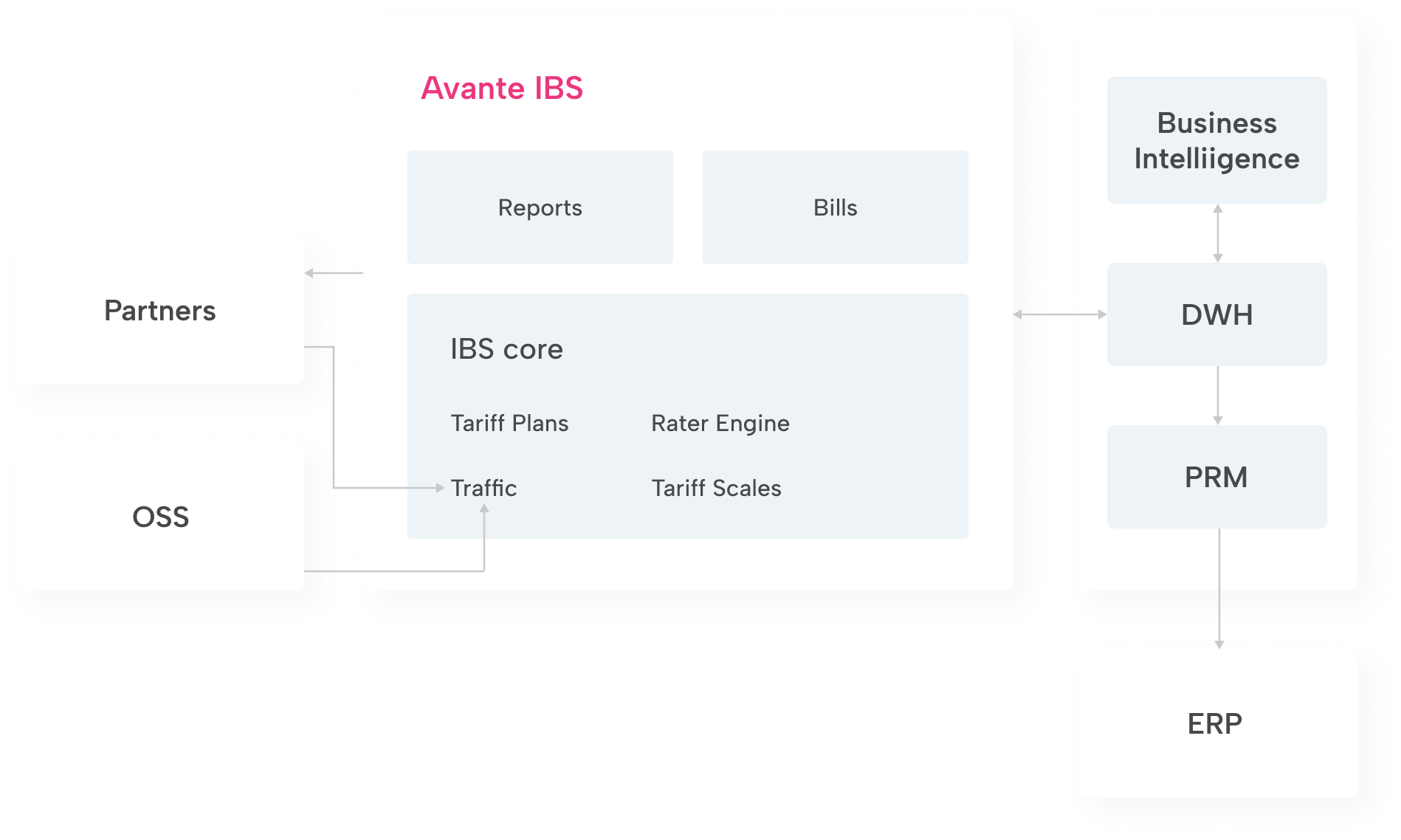
Consolidated analytical reporting and statistical analysis of the attractiveness of individual areas usage with the ability to automatically upload data to the external systems for deep analysis.

Issuing bills for consumption and counter bills for reconciliation with operators and the ability to accept different types of payments and maintain a partner's balance in the system.

To simplify the loading processes and reconfiguration of matrixes, a specialized interface is used to perform this in mass processing mode.
02
Avante IBS is an independent system that uses a separate DBMS instance. Since such systems are required to deal with large amounts of data, the processes are oriented to mass data processing in multi-threaded modes.

Additional system convenience is the ability to repeatedly perform the operation of linking and relinking the downloaded traffic, iterative work on tariffing and reconciliation, tools for finding and eliminating discrepancies. With the system it is possible to bill both independently and by uploading all the necessary data to an external system.
The system has a standard API that allows to quickly integrate the system into the existing infrastructure. This applies both to integrating with the business applications in use, and to the various technical platforms through which the customer service is provided.
03
Interconnect billing is the calculation of what operators owe each other for traffic exchanged between their networks: voice, SMS and data that one network carries or terminates for another. Each side rates the traffic under the interconnect agreement, then the two compare results and settle the difference.
Each operator rates the traffic it exchanged with a partner over the period and issues or receives a statement. Reconciliation compares that statement with your own records, flags discrepancies for dispute, and the agreed balance is netted and paid. Avante IBS lets you relink and re-rate the traffic as often as needed until the figures match.
A full MVNO with its own core network usually does, because it pays and collects interconnect fees itself. A light MVNO often leaves interconnect to the host operator, so the answer depends on the operating model.
Partners and their agreements, partner tariffs with validity dates, traffic records and their aggregates by partner, route and period, partner statements, discrepancies and disputes, and settlement invoices. Avante IBS keeps all of it in a database instance of its own, built for mass traffic processing.
Retail billing charges your subscribers under your own price plans. Interconnect billing charges other operators under bilateral agreements, works with traffic volumes rather than individual customers, and ends in a reconciled settlement rather than a customer invoice.
04
05